LIVE STREAMING SERVICES
When something important is happening, the people who matter most shouldn’t have to miss it. Professional live streaming services make it possible for remote participants to follow an event in real time, whether they’re across New York City, across the country, or on the other side of the world.
We provide professional live streaming services for corporate events, conferences, panel discussions, executive presentations, internal communications, hybrid meetings, and private celebrations across New York City, Northern New Jersey, and the Hudson Valley.
The focus is always the same: a broadcast that arrives cleanly, sounds right, and doesn’t fail when it matters. This page explains how professional live streaming production works, what infrastructure makes a broadcast reliable, and why preparation, not just equipment, determines whether a stream succeeds or fails.
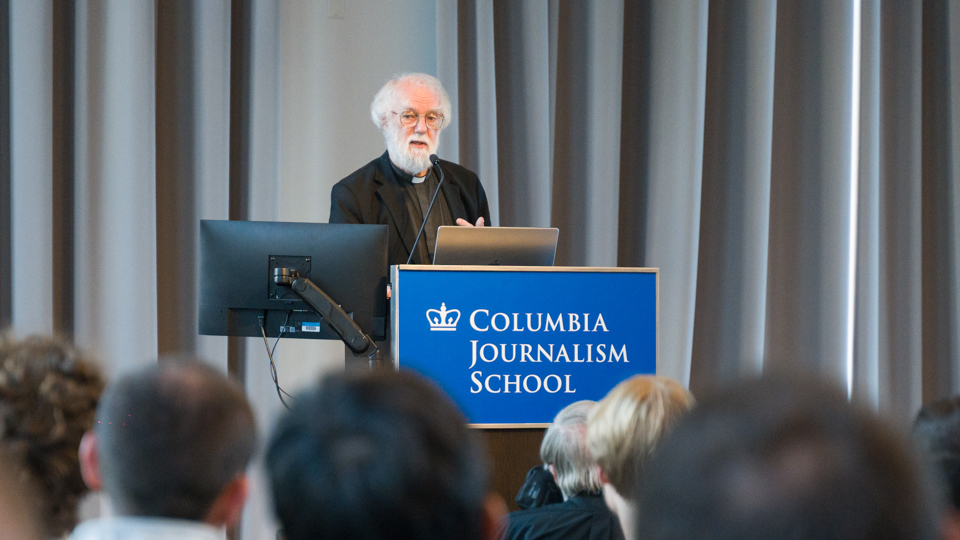
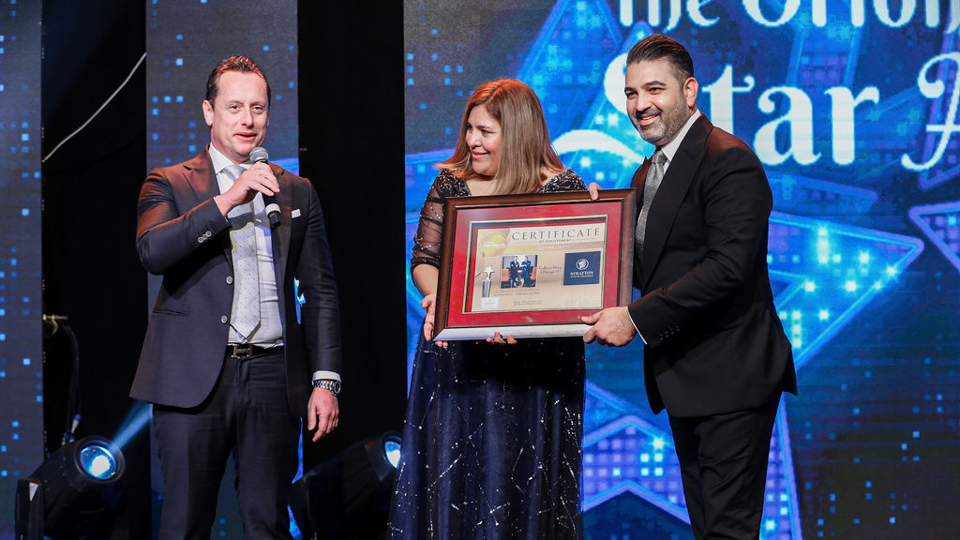

WHAT PROFESSIONAL LIVE STREAMING ACTUALLY INVOLVES
Most people don’t think about live streaming until something goes wrong with it. A frozen frame during a keynote. Audio that cuts out mid-sentence. A wedding ceremony that buffers for remote guests at exactly the wrong moment.
Professional live streaming exists to prevent those moments. It’s not about sending video online — it’s about stable signal management, controlled audio, reliable encoding, and redundancy planning built around your specific event.
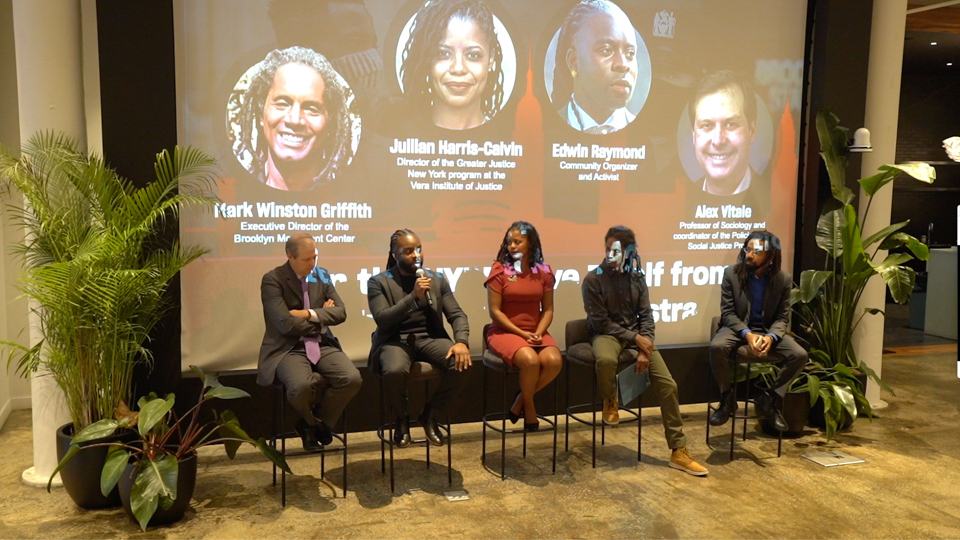
A live broadcast involves multiple systems working in parallel: camera placement, audio integration, encoding hardware, network connectivity, and platform configuration. Each layer is tested before the event and monitored throughout it. When one path develops a problem, a backup is already running.
Think of it the way broadcast television works. The same discipline that keeps a network newscast on air — the redundancy, the monitoring, the contingency planning — is what we bring to a corporate presentation, a conference keynote, or a wedding ceremony. The scale is different. The standards aren’t.
WHY LIVE STREAMING FAILS (AND HOW TO PREVENT IT)
Live streaming failures rarely come from bad equipment. They come from gaps in planning — a single internet connection with no backup, audio that was never properly tested, a platform configured at the last minute. Here’s where things typically go wrong:
Unstable internet. Venue Wi-Fi is not a broadcast connection. A hardwired ethernet line with verified upload speed is the baseline. Without a backup, one network hiccup means a dropped stream.
Poor audio. Remote audiences will tolerate imperfect video. They won’t stay for audio they can’t follow. A camera microphone pointed at a panel of speakers is not a solution.
No redundancy. Live events don’t have second takes. If a single camera, encoder, or connection fails, the broadcast fails with it — unless secondary systems are already in place.
Undefined platform setup. Streaming to the wrong destination, or with the wrong access settings, means your intended audience can’t get in. Or the wrong people can.
A structured live streaming workflow addresses each of these before the event starts — not during it.
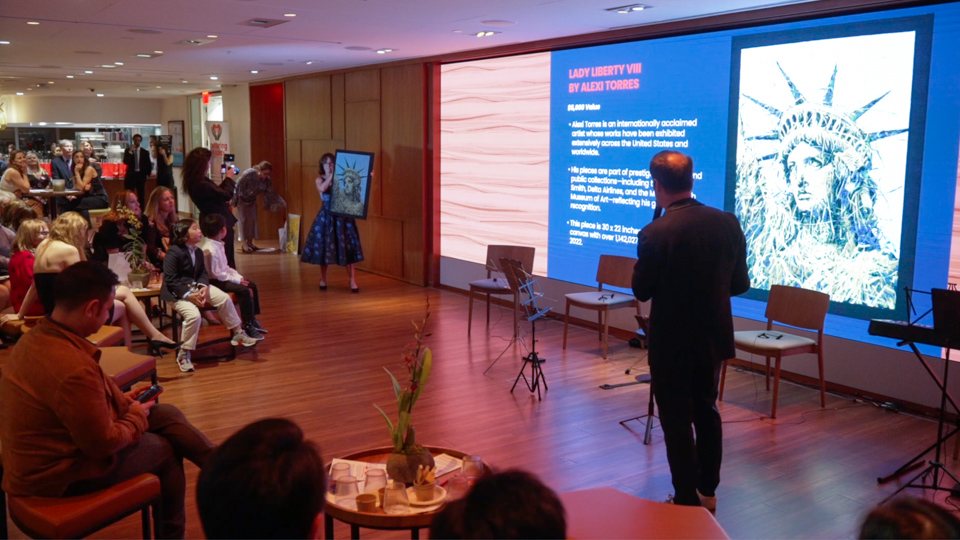
THE PRODUCTION FOUNDATION FOR LIVE BROADCAST
Every event is different, so production planning starts with the specifics: What’s the venue? What’s the internet situation? How many audio sources? How many cameras? What does the platform need to support?
Connectivity comes first. A hardwired connection with confirmed upload speed is the foundation. When venue internet is uncertain — and it often is — cellular bonding provides a secondary transmission path that runs in parallel.
Audio is the one element remote audiences won’t forgive. They can overlook slightly lower video resolution. They can’t follow a conversation they can’t hear clearly. Podium microphones, wireless lavaliers, and venue sound systems are integrated into a clean, balanced mix before the event begins.
Camera placement determines what remote viewers actually experience. A single-camera setup needs to capture speakers and key visuals without distraction. Multi-camera productions use angle switching to keep remote audiences engaged over longer sessions.
Encoding and platform setup are tested in advance — not assumed. Hardware converts camera feeds into a streamable signal. Platform settings control who can watch, whether the event is recorded, and how audience interaction works. Testing these before the event is not optional.
Failover systems are built in from the start. Redundant cameras, backup encoders, and secondary streaming paths mean that a single equipment issue doesn’t take the broadcast offline.
ORGANIZATIONS THAT USE PROFESSIONAL LIVE STREAMING
A financial services firm needs remote investors to hear the quarterly update in real time — not through a recording sent three days later. A secure, private live stream puts them in the room.
A pharmaceutical company rolls out compliance training across multiple New Jersey locations. A live stream with integrated slides and clear audio ensures that everyone receives the same information at the same time, with a recording available afterward for documentation.
A Manhattan media company launches a product at a Midtown venue that holds 200 people. The guest list is 600. A multi-camera live stream brings the rest of the audience in without compromise.
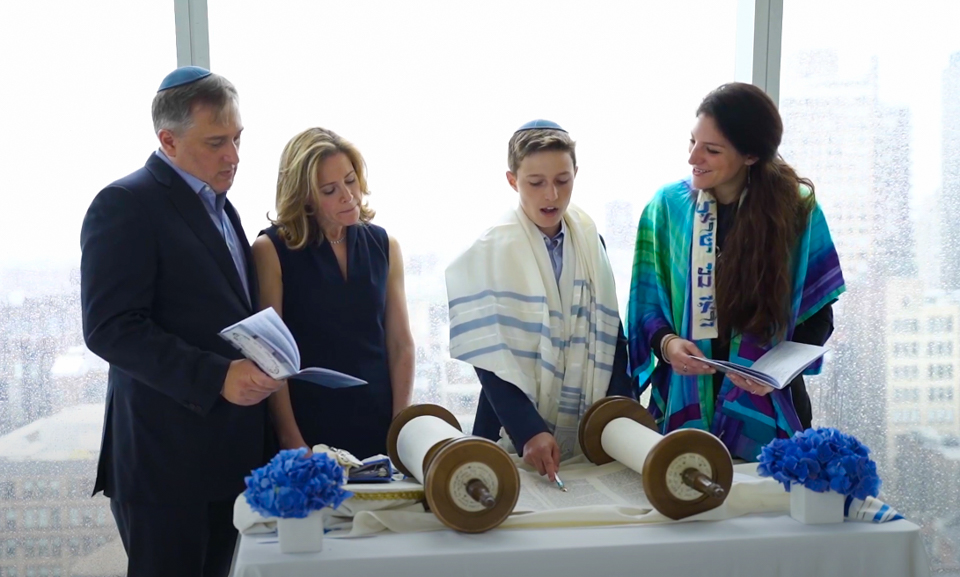
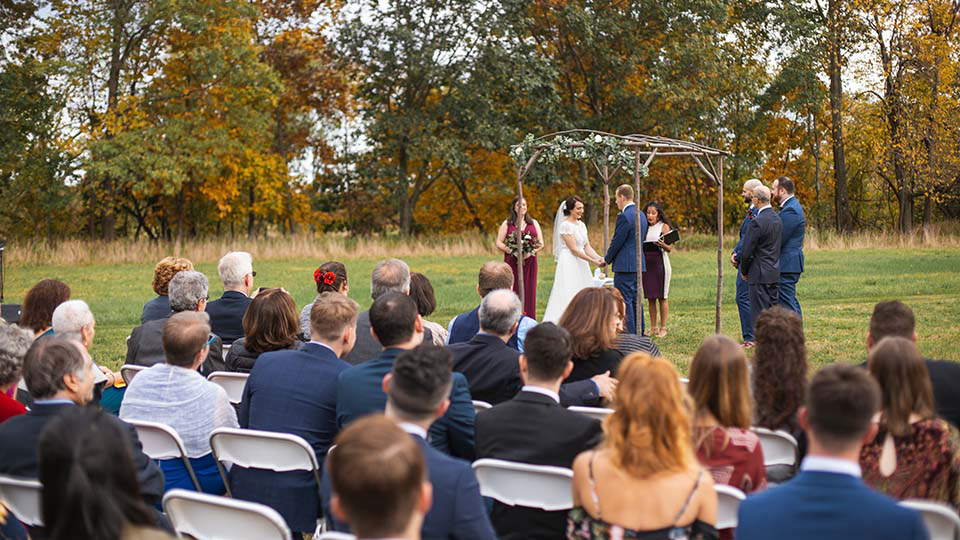
A wedding ceremony takes place in the Hudson Valley. The grandparents can’t travel. A single-camera stream with clear audio lets them watch the vows, not just see photos afterward.
A conference organizer runs concurrent sessions across multiple tracks. Attendees watch the sessions they couldn’t attend live. Recordings go up the same day.
A healthcare network trains staff across multiple facilities. The session runs live, then goes into the archive for anyone who missed it or needs to review it later.
WEDDING LIVE STREAMING AND CEREMONY COVERAGE
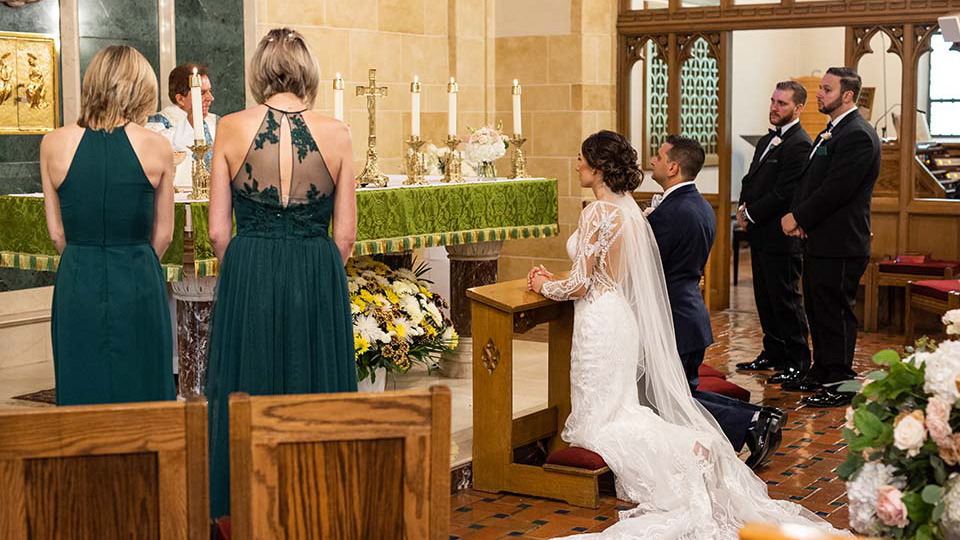
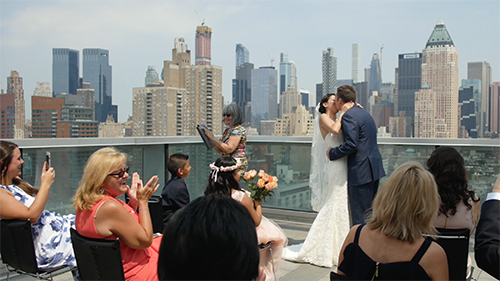
Some guests can’t be there in person. That’s just the reality of modern families — distances are long, health gets in the way, life interferes. Wedding live streaming is how couples make sure those people are still part of the day, not just hearing about it afterward.
There’s always someone who can’t be there — a grandparent too far away to travel, a close friend dealing with something that keeps them home. For those people, the stream is the ceremony. It needs to be good enough to carry that.
That means vows that are clearly heard, not muffled or clipped. Readings that come through intelligibly. Camera placement that captures expressions and atmosphere without a crew member standing in the frame.
Reception coverage can extend beyond the ceremony itself — processional, exchange of vows, recessional, cocktail hour highlights, toasts, first dances. When reception audio is included, we integrate directly with the venue sound system so that speeches and announcements are captured cleanly.
Streams are delivered through private, password-protected links. Only the guests you invite can watch. Access can be managed by the couple or through the wedding planner.
LIVE STREAMING FORMATS AND PLATFORMS
Professional live streaming can be configured as a single-camera or multi-camera production, a hybrid event stream, a private or password-protected broadcast, a public stream for larger audiences, or a simultaneous multi-platform distribution.
Platform selection depends on the event’s goals and how the audience needs to access it. We stream to Twitch, YouTube, Facebook, Zoom, and custom RTMP destinations. For internal events, delivery can go through private access pages or integrate with existing video conferencing systems.
POST-EVENT RECORDINGS AND DELIVERABLES
Most live streams are also recorded. The recording captures the same broadcast-quality signal as the live stream, and can be delivered as a downloadable HD video file, archived for a set period, or edited into shorter segments for ongoing use — training libraries, internal communications, on-demand viewing, or documentation.
For organizations that need to retain content for compliance or institutional purposes, recordings can be formatted and labeled to meet those requirements.
HYBRID EVENTS AND STREAMING INFRASTRUCTURE
Hybrid events — where in-person and remote audiences participate simultaneously — require particular attention to how both groups experience the event. Remote viewers need more than a camera pointed at a stage. They need to feel present.
For hybrid productions, we manage camera coverage that captures both speakers and audience reactions, platform integration for real-time chat or Q&A from remote participants, and recording for distribution to those who couldn’t attend live.
LIVE STREAMING SERVICES BY REGION
Live streaming services are available across three regions. The technical standards are consistent across all of them, but each region has its own event environment, venue landscape, and logistical considerations.
NEW YORK CITY
High-density venues, executive visibility, compressed timelines. Events here face media scrutiny, investor audiences, and corporate expectations. Production must be precise, efficient, and capable of handling last-minute changes. Broadcasts often support wedding ceremonies, product launches, investor updates, and high-profile corporate events where failure is not an option. Event Live Streaming NYC
NEW JERSEY
Corporate parks, pharmaceutical campuses, suburban conference centers. Events often involve compliance considerations, multi-building coordination, and internal audiences across distributed locations. Production respects security protocols and regulatory requirements while maintaining consistent technical standards. Event Live Streaming New Jersey
HUDSON VALLEY
Educational institutions, healthcare systems, wedding venues, arts organizations. Events serve long-term institutional needs, from lecture capture to ceremony streaming. Production emphasizes archival quality, accessibility, and continuity across multiple campuses or facilities. Event Live Streaming Hudson Valley
FREQUENTLY ASKED QUESTIONS
What types of events can be live streamed? Conferences, corporate events, presentations, panel discussions, internal meetings, product launches, weddings, and hybrid events.
Can live streaming support both remote and in-person audiences? Yes. Hybrid events — where on-site and remote audiences participate simultaneously — are a common use case.
Are live streams recorded? Most professional live streams include recording. The content can be reused, distributed, or accessed on demand after the event.
How is broadcast continuity protected? Through stable connectivity planning, proper audio management, and failover systems built into the production before the event begins.
What platforms can you stream to? YouTube, Facebook, Vimeo, LinkedIn Live, custom RTMP destinations, and private access pages.
Can streams be password protected? Yes. Streams can be delivered through password-protected pages or private platforms depending on access requirements.
Is on-site technical support provided? Yes. On-site support manages equipment, monitors stream quality, and handles any technical adjustments in real time.
How far in advance should live streaming be booked? Corporate and conference events benefit from booking several weeks in advance. Smaller events may be possible on shorter notice depending on availability.
Do you stream wedding ceremonies? Yes. Wedding ceremony live streaming is one of our most requested services. We handle clear audio of vows, thoughtful camera placement, password-protected access for invited guests, and a high-definition recording for the couple.
STARTING A LIVE STREAMING PROJECT
Every project starts the same way: we talk through the event format, the audience, and the venue. We assess connectivity, acoustics, and camera options. We make sure the platform setup matches your access requirements before anything goes live.
If you have an event coming up and want to understand what a professional production involves, we’re easy to reach. No pressure, no jargon — just a straightforward conversation about what you need.
For a structured overview of production formats and service levels, visit: Live Streaming Packages